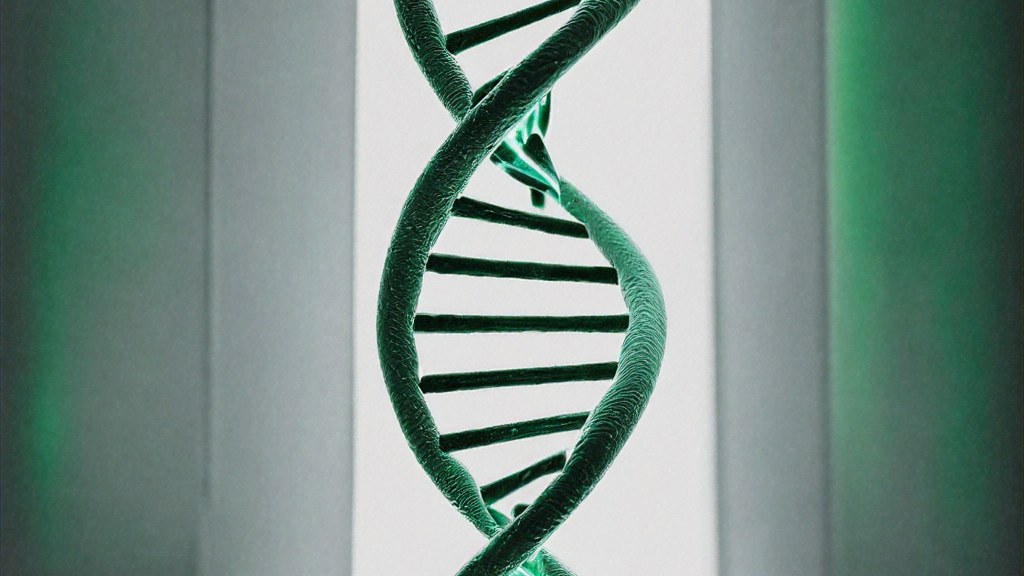
Advances in Synthetic DNA Encoding for Industrial Applications
Synthetic DNA has made the transition from the research laboratory to the factory floor, driven by a decade of exponential cost reduction in oligonucleotide synthesis and by a deepening understanding of how to encode, protect, and reliably recover information from DNA molecules in industrial environments. This article examines the technical foundations of synthetic DNA encoding and the advances that are making large-scale industrial deployment both technically feasible and economically compelling.
The Information Density Advantage: Why DNA?
DNA is the most information-dense storage medium known to exist. A single gram of DNA can theoretically store approximately 215 petabytes of data — a figure that dwarfs every competing medium by orders of magnitude. A standard 3.5-inch hard disk drive stores roughly 10 terabytes per kilogram; DNA stores 215 million terabytes per kilogram. This extraordinary information density is a direct consequence of DNA's molecular architecture: four distinct chemical bases (adenine, thymine, cytosine, and guanine) arranged in sequences that can be of almost arbitrary length, with each base occupying roughly 0.34 nanometers of linear space.
For industrial authentication applications, the practical implications of this density are profound. A marker containing enough unique sequence information to encode trillions of distinct identifiers can be produced at concentrations so low — typically in the nanogram-per-milliliter range — that it is physically undetectable in most materials by any means other than molecular analysis. The marker is simultaneously information-rich and materially insignificant, a combination no other technology can match.
DNA Synthesis Cost Curves: The Economic Enabler
The commercial viability of DNA-based industrial applications has been gated primarily by the cost of oligonucleotide synthesis. For decades, DNA synthesis remained expensive enough to confine commercial applications to research and diagnostics, where the value of small quantities justified the per-nucleotide cost.
The transformation began around 2010 with the emergence of massively parallel synthesis platforms — initially driven by next-generation sequencing library preparation needs — that dramatically increased throughput while reducing per-base costs. The cost trajectory has followed a curve steeper than Moore's Law in some periods:
- 2003: Synthesis cost approximately $10 per base; a 100-mer oligonucleotide cost roughly $1,000.
- 2010: Costs had fallen to approximately $0.50 per base for standard oligos through competitive commercial suppliers.
- 2017: Microarray-based synthesis platforms reduced costs for large sequence pools to below $0.01 per base in aggregate.
- 2022: Electrochemical and photochemical synthesis platforms demonstrated sub-$0.001 per base costs at scale for DNA data storage pilot programs.
- 2025: Projected costs for commodity synthetic DNA sequences at industrial volumes have reached price points compatible with deployment in high-volume manufactured goods costing as little as $50-100 per unit.
This cost reduction is not yet at the level required for mass-market consumer goods authentication — a $5 T-shirt cannot support a $0.50 authentication marker. But the trajectory is clear, and the economic threshold for premium goods, pharmaceuticals, specialty chemicals, and luxury materials has already been crossed. For these categories, DNA authentication is not merely technically feasible — it is economically rational.
The synthesis cost reduction has been accompanied by improvements in synthesis fidelity, throughput, and miniaturization. Chip-based synthesis platforms now routinely produce pools of thousands of distinct sequences in a single run, enabling the creation of large marker libraries without proportionate increases in cost. Error rates in commercial synthesis have improved from approximately 1 per 100 bases in early phosphoramidite chemistry to 1 per 200-500 bases in current platforms, with further improvements expected from enzymatic synthesis approaches currently in development.
Encoding Schemes: From Binary to Base-4
Digital information is natively represented in binary — sequences of 0s and 1s. DNA, with its four-base alphabet, is a quaternary (base-4) medium. The translation between these representations is the domain of DNA encoding scheme design, and significant research effort has been invested in developing schemes that maximize information density while maintaining sequence properties favorable for synthesis, stability, and sequencing readout.
Simple Two-Bit Encoding
The most straightforward encoding maps two binary bits to each DNA base: 00=A, 01=C, 10=G, 11=T. This achieves the theoretical maximum of 2 bits per base and is simple to implement. However, it does not constrain the resulting sequences in any way, meaning that random binary data will often produce sequences with properties unfavorable for synthesis and analysis:
- Long homopolymer runs (AAAAAAA, CCCCCC) are error-prone in synthesis and sequencing.
- High GC content creates sequences with high melting temperatures that are difficult to process consistently.
- Palindromic sequences can form intramolecular secondary structures that interfere with both synthesis and amplification.
Constrained Coding Approaches
To address these issues, researchers have developed constrained encoding schemes that accept a small reduction in information density in exchange for sequences with predictable, favorable properties. The Goldman encoding, developed at the European Bioinformatics Institute, uses a rotation scheme in which each base is chosen to be different from the previous base — eliminating homopolymers while achieving approximately 1.6 bits per base. Subsequent approaches by Church et al. at Harvard and Organick et al. at the University of Washington have achieved information densities of 1.8 to 1.9 bits per base while maintaining synthesis-compatible sequence constraints.
For industrial authentication applications, the encoding scheme must satisfy an additional requirement not present in pure data storage use cases: the encoded sequence must be chosen from a library of sequences that are mutually distinguishable even with the sequencing error rates typical of field-deployable platforms. This requires minimum Hamming or edit distances between all pairs of sequences in the library, which constrains the effective size of the identifier space available at any given sequence length.
A 100-nucleotide sequence with a minimum edit distance of 5 between all library members provides an addressable space on the order of 10^20 distinct identifiers — sufficient for any imaginable industrial authentication application. The practical challenge is building and managing the library efficiently, a task that Haelixa addresses through proprietary combinatorial sequence design algorithms.
Combinatorial Marker Design
Rather than encoding arbitrary data in a single long sequence — an approach that requires synthesis of custom oligonucleotides for every application — Haelixa's industrial marker platform uses a combinatorial approach. A library of short, pre-synthesized sequences serves as an alphabet; specific combinations of sequences from the library, mixed in defined ratios, encode each unique identifier. This approach offers several practical advantages:
- The library sequences can be synthesized at scale and stockpiled, dramatically reducing turnaround time for new marker orders compared to custom sequence synthesis.
- Detection can use multiplexed assays that simultaneously query the presence/absence of multiple library sequences, enabling rapid identification without full sequencing of the marker mixture.
- The combinatorial space is large: a library of 30 sequences used in combinations of 5 provides over 140,000 unique identifiers; a library of 50 sequences in combinations of 5 provides over 2 million identifiers. Industrial-scale libraries easily support millions to billions of distinct identifiers.
Error Correction in DNA-Based Systems
DNA is not a static storage medium — it is subject to chemical degradation, physical damage, and copying errors during amplification. In data storage applications, where exact bit-perfect recovery is required, this necessitates sophisticated error correction coding. In authentication applications, where the goal is identification (is this Sequence X?) rather than perfect data recovery, the requirements are different but still demanding.
Sources of Error in Industrial DNA Systems
Industrial DNA markers face several error mechanisms that must be accounted for in system design:
- Synthesis errors: Insertions, deletions, and substitutions introduced during oligonucleotide synthesis. Typical rates of 0.5-1% per base for current platforms, manageable through quality-controlled synthesis and purification.
- Chemical degradation: Hydrolysis of the phosphodiester backbone, particularly under acidic or basic conditions; oxidative damage to nucleobases, particularly guanine; UV photodamage. Encapsulation addresses all of these (see below).
- Amplification errors: PCR introduces errors at rates of approximately 10^-5 to 10^-6 per base per cycle for high-fidelity polymerases — negligible for authentication applications involving sequences of 50-200 bases.
- Sequencing errors: Platform-dependent; nanopore sequencing currently achieves single-read accuracies of 95-99% depending on sequence context, with consensus accuracy approaching 99.99% with sufficient read depth. Short-read platforms (Illumina) achieve base accuracies exceeding 99.9% for most sequence contexts.
Reed-Solomon and Fountain Codes for DNA
For DNA data storage applications requiring high-fidelity information recovery, Reed-Solomon codes and Luby transform (fountain) codes have been adapted for the DNA channel. Reed-Solomon codes, originally developed for digital communications and used in CD and DVD error correction, are particularly well suited because they handle burst errors (loss of an entire DNA molecule from the pool) as well as random substitution errors. The Bornholt et al. and Organick et al. papers demonstrated that kilobytes to megabytes of data can be stored in DNA and recovered with zero errors after storage periods simulating decades of archival conditions.
For authentication — as distinct from storage — the error tolerance requirements are less stringent because the query is binary (does this marker match a known library member?) rather than reconstructive. Authentication systems can use shorter sequences, simpler error correction, and faster readout methods while achieving the requisite false positive and false negative rates. Haelixa's authentication assays are designed with a false positive rate below 10^-9 (less than one false authentication per billion verification events) and a false negative rate below 10^-3 under worst-case degradation conditions.
Encapsulation Advances: Protecting DNA in Harsh Environments
The thermal and chemical stability of naked (unprotected) DNA is insufficient for most industrial environments. Naked DNA in aqueous solution has a half-life measured in hours at physiological temperature under ambient conditions, and is even more rapidly degraded by elevated temperature, acidic conditions, UV exposure, and nuclease enzymes present in biological materials and some industrial process streams.
Encapsulation within protective matrices is the enabling technology that makes DNA molecular markers viable for industrial use. The encapsulation approach taken by Haelixa centers on amorphous silica shells produced by sol-gel condensation of tetraethoxysilane (TEOS) around DNA molecules in solution. This approach was pioneered by Grass et al. at ETH Zurich and has been extensively characterized for a range of harsh condition environments.
Silica Encapsulation Performance
The silica encapsulation approach offers remarkable stability improvements:
- Thermal stability: Encapsulated DNA retains full amplifiability after exposure to 160°C for 60 minutes — well above the temperatures encountered in textile dyeing, polymer processing, and most pharmaceutical manufacturing operations. Extrapolated Arrhenius calculations suggest stability at room temperature exceeding 2,000 years.
- Chemical resistance: Silica shells are resistant to strong acids down to pH 1, strong oxidants including bleach and hydrogen peroxide, and organic solvents. The primary vulnerability is strong base (NaOH concentrations above 1 M), which is addressable through surface functionalization of the silica shell.
- UV resistance: Encapsulated DNA shows no significant degradation after 1,000 hours of simulated solar UV exposure at surface-relevant intensity — extending usable outdoor lifetime far beyond any labeling or coating approach.
- Release for detection: Encapsulated DNA is released rapidly and completely by treatment with dilute hydrofluoric acid or chelating fluoride reagents such as ammonium bifluoride, enabling fast and complete sample preparation for downstream PCR or sequencing analysis.
Polymer Encapsulation Alternatives
Silica encapsulation is optimal for high-temperature and chemically extreme applications, but its hardness limits applicability in contexts where flexibility and mechanical deformation resistance are required — textile fibers, flexible packaging, and elastomeric materials. For these applications, Haelixa employs polymer encapsulation systems based on cross-linked polyethylene glycol (PEG) hydrogels, polyurethane microspheres, or core-shell acrylic latex particles, each optimized for specific application contexts.
Polymer-encapsulated markers provide somewhat lower thermal stability than silica (typically validated to 100-130°C) but offer superior adhesion to polymer substrates, flexibility compatible with deformation, and compatibility with aqueous coating and finishing processes. The choice of encapsulation system is one of the key customization variables in Haelixa's marker formulation process, selected based on the specific material and process conditions of each application.
Scalability for Industrial Volumes
One of the critical questions for industrial deployment of DNA authentication is whether the platform can scale to the volumes required by industrial manufacturing. The answer is emphatically yes — and the pathway to scale is straightforward given the economics of DNA synthesis and the extreme sensitivity of molecular detection.
A marker applied at a concentration of 1 microgram per liter (1 ppb) to a textile dye bath treating 10,000 kg of fabric requires a total of approximately 10 milligrams of DNA marker per batch. Current commercial synthesis platforms produce grams of oligonucleotide per day. A single synthesis campaign of a few days produces enough marker material to authenticate hundreds of thousands of production batches — tens of millions of individual garments.
Scaling is therefore not constrained by synthesis capacity but by quality control, formulation, and logistics — the conventional manufacturing infrastructure for specialty chemical additives. Haelixa's Swiss manufacturing facility currently produces marker formulations at kilogram scale with full GMP-compatible quality systems, with capacity expansion planned as part of the 2025 seed round investment program.
At the detection end, scale is similarly favorable. Real-time PCR systems routinely process 96 to 384 samples simultaneously, and high-throughput sequencing platforms can generate sequence reads for thousands of samples in parallel. The throughput available from current analytical platforms is sufficient to support verification rates of millions of samples per year at a single laboratory — and Haelixa's architecture supports a distributed verification network in which authorized parties at different points in the supply chain operate their own readers within a centrally managed authentication ecosystem.
Cost Comparison: DNA Markers vs. RFID vs. QR Codes
A rigorous cost comparison between authentication technologies must account for the full system cost — not just the per-unit cost of the marker or tag itself, but the total cost of infrastructure, deployment, operation, and maintenance across the supply chain:
RFID
Ultra-high-frequency (UHF) RFID tags for item-level tracking cost between $0.07 and $0.30 per tag at volumes of millions of units, depending on form factor and read range requirements. This per-unit cost is supplemented by reader infrastructure costs ($500-3,000 per fixed reader portal, plus ongoing maintenance), specialized application equipment, and IT systems integration. RFID also requires a line-of-sight-free zone of approximately 1-10 meters for reliable reading, constraining deployment in dense storage environments. Total system costs for item-level RFID in apparel, for example, typically run $0.15-$0.50 per item when infrastructure is amortized.
QR Codes
Printed QR codes have near-zero incremental cost when incorporated into existing label printing workflows — effectively a variable print cost of fractions of a cent per label. However, QR codes provide no material-level authentication and are trivially replicable, meaning their value for anti-counterfeiting is limited to linking to a backend database — and that link can be exploited by copying the QR code to counterfeit products. For applications where the QR code merely links to additional product information rather than providing authentication, the cost model is favorable; for authentication use cases, the total cost of the security system must include fraud investigation and remediation costs resulting from QR cloning, which substantially changes the economics.
DNA Molecular Markers
Haelixa's DNA marker costs depend on application volume, material type, and marker concentration requirements. For textile applications at scale, marker material costs run approximately $0.05-$0.20 per kilogram of treated material — equivalent to $0.001-$0.005 per garment for standard-weight apparel. Reader infrastructure for field deployment (portable PCR-based readers) runs $5,000-$15,000 per unit, with reagent costs of $5-$15 per test for field verification and $15-$40 per test for full laboratory forensic verification.
The total system cost for DNA authentication, properly amortized, is therefore competitive with or lower than RFID for applications where reader infrastructure is deployed selectively (at audit points, customs, and laboratory verification) rather than at every handling step. For applications requiring authentication at every physical handoff — like RFID-enabled retail inventory management — RFID has a lower infrastructure cost per touchpoint. But for applications where authentication is primarily a fraud investigation and supply chain verification tool rather than an operational tracking tool, DNA molecular markers offer a superior cost-security tradeoff.
The Horizon: Enzymatic Synthesis and Ultra-Low Cost
The next major inflection point in DNA synthesis economics will come from enzymatic (template-free) synthesis platforms, which several companies including Twist Bioscience, DNA Script, and Nuclera Nucleics are developing commercially. Enzymatic synthesis uses terminal deoxynucleotidyl transferase (TdT) or other polymerases to add individual nucleotides to growing chains without the toxic organic solvents required by conventional phosphoramidite chemistry, enabling miniaturized, parallelized synthesis at lower cost and with fewer hazardous waste streams.
Enzymatic synthesis platforms are expected to reach commercial maturity in the next three to five years. Projections from leading research groups suggest that enzymatic synthesis could reduce costs by a further 10-100x compared to current photolithographic platforms — potentially bringing the synthesis cost of authentication-grade DNA sequences below $0.0001 per identifier. At those prices, DNA authentication becomes economically viable for mass-market consumer goods and high-volume commodity materials, opening a market currently inaccessible to the technology.
Haelixa is actively tracking developments in enzymatic synthesis and has established research collaborations to evaluate the integration of next-generation synthesis platforms into its marker production workflow. The company's platform architecture is designed to be synthesis-technology-agnostic — the encoding, encapsulation, and detection systems are independent of the method by which the DNA sequences are produced. This forward-compatible design ensures that Haelixa can incorporate cost reductions from synthesis innovation as they materialize, without requiring redesign of the broader system.
For researchers, engineers, and technical decision-makers interested in learning more about Haelixa's synthetic DNA encoding technology and its industrial applications, the company's technical team is available for discussions through haelisa.com/contact.
Published by the Haelixa Editorial Team ·